Channel operation
- Elapsed time
- 0s
- Estimated remaining
- Estimating…
No changes saved yet.
Keep this page open while work is running. Estimates change with channel size; leaving may interrupt unsaved work.
View results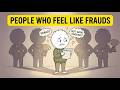
The Psychology of People Who Feel Like Impostors
The Bodycam Report | 2026-03-14
Description
The Psychology of People Who Feel Like Impostors Have you ever achieved something incredible — a promotion, a degree, a creative milestone — and still felt like you didn't truly deserve it? The Psychology of People Who Feel Like Impostors dives deep into one of the most quietly devastating mental pa...
The Psychology of People Who Feel Like Impostors Have you ever achieved something incredible — a promotion, a degree, a creative milestone — and still felt like you didn't truly deserve it? The Psychology of People Who Feel Like Impostors dives deep into one of the most quietly devastating mental patterns affecting high achievers, perfectionists, and everyday people across every generation. This isn't just about self-doubt. Impostor syndrome is a complex psychological experience rooted in early conditioning, cultural messaging, family dynamics, and the way our brains are literally wired to protect us from social rejection. And the most unsettling part? The more competent you are, the harder it often hits. In this video, we unpack the real psychology behind why intelligent, capable people convince themselves they're frauds — and why that belief is so stubbornly resistant to logic, success, or external validation. Here's what you'll discover: 🧠 What impostor syndrome actually is — and what most people get dangerously wrong about it 🔬 The original 1978 research by Dr. Pauline Clance & Dr. Suzanne Imes — and how their findings still reshape modern psychology 👨👩👧 How childhood environments, parenting styles, and family praise patterns plant the seeds of chronic self-doubt 🌍 Why certain cultures, racial groups, and first-generation achievers experience impostor feelings at significantly higher rates 📱 The hidden role social media plays in amplifying the "everyone else has it figured out" illusion 🎭 The five distinct impostor archetypes — which one are you? 💡 Evidence-based psychological strategies to start dismantling the impostor narrative from the inside out Whether you're a student, a professional, a creative, or someone who has simply spent years feeling like you're one mistake away from being "found out" — this video was made for you. Psychology doesn't just explain our struggles. It gives us a mirror, a map, and eventually, a way forward. Drop a comment below — do you experience impostor syndrome? When does it hit you hardest? Your story might be exactly what someone else needs to hear today. 👇 📚 REFERENCES Clance, P. R., & Imes, S. A. (1978). The impostor phenomenon in high achieving women: Dynamics and therapeutic intervention. Psychotherapy: Theory, Research & Practice, 15(3), 241–247. Sakulku, J., & Alexander, J. (2011). The impostor phenomenon. International Journal of Behavioral Science, 6(1), 75–97. Peteet, B. J., Montgomery, L., & Weekes, J. C. (2015). Predictors of impostor phenomenon among talented ethnic minority undergraduate students. The Journal of Negro Education, 84(2), 175–186. Bravata, D. M., et al. (2020). Prevalence, predictors, and treatment of impostor syndrome: A systematic review. Journal of General Internal Medicine, 35(4), 1252–1275. Twenge, J. M. (2017). iGen: Why Today's Super-Connected Kids Are Growing Up Less Rebellious, More Tolerant, Less Happy — and Completely Unprepared for Adulthood. Atria Books. Young, V. (2011). The Secret Thoughts of Successful Women: Why Capable People Suffer from the Impostor Syndrome and How to Thrive in Spite of It. Crown Business. Bandura, A. (1997). Self-Efficacy: The Exercise of Control. W. H. Freeman and Company. ⚠️ DISCLAIMER The content presented in this video is intended purely for educational and informational purposes. It is not a substitute for professional psychological advice, diagnosis, or treatment. If you are experiencing significant distress, persistent feelings of worthlessness, or other mental health concerns, please consult a licensed mental health professional or therapist. The discussions of psychological concepts and research are meant to increase awareness and promote general understanding — not to serve as clinical guidance.
Tags
Transcripts
AddResources
AddCharacters
AddNotes
AddQuick Actions
Generate Transcript Not implemented
View Analytics Not implemented
Event Details
EditStats History
Latest 30 saved snapshots, oldest to newest.
| Date & time | Views | Likes | Comments |
|---|---|---|---|
| 2026-10-17 04:07:16 | 77 | 1 | 0 |
Danger Zone
These actions cannot be undone.