Channel operation
- Elapsed time
- 0s
- Estimated remaining
- Estimating…
No changes saved yet.
Keep this page open while work is running. Estimates change with channel size; leaving may interrupt unsaved work.
View results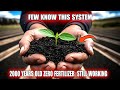
2000 Years Of Food, Zero Fertilizer: Why Modern Agriculture Fears This Ancient System
Bodycam CrossExposed | 2025-12-21
Description
There is soil that grows warmer when the air freezes. That survived the worst drought in 60 years while modern farms failed. That fed tens of thousands of people for over 2,000 years without a single gram of fertilizer. Spanish chroniclers in the 1530s documented every agricultural system they found...
There is soil that grows warmer when the air freezes. That survived the worst drought in 60 years while modern farms failed. That fed tens of thousands of people for over 2,000 years without a single gram of fertilizer. Spanish chroniclers in the 1530s documented every agricultural system they found—except this one. Why? 🔬 THE SCIENCE: Passive Climate Engineering at 4,000 Meters: The Waru Waru system uses raised earth platforms 4-10 meters wide surrounded by water channels. At night when temperatures drop to -20°C, the water releases stored solar heat, keeping platform soil 1°C warmer than surrounding ground. That single degree prevents frost damage without fossil fuel energy. Cold air, being denser, falls by gravity into channels below crop level—climate control through physics alone. Self-Generating Nitrogen in Nitrogen-Poor Soil: Modern soil science says continuous cropping without fertilizer equals degradation within 50-100 years. Yet Waru Waru fields operated for 2,000+ years and the soil got RICHER, not poorer. The secret: aquatic plants in channels fix atmospheric nitrogen. Algae, totora reeds, and duckweed grow naturally. Farmers dredge accumulated organic sediment annually and spread it on platforms—a self-renewing fertility cycle that chemistry textbooks say shouldn't work at altitude. Climate Resilience Modern Agriculture Cannot Match: In 2023, Puno Peru suffered its worst drought in almost 60 years. Conventional fields failed across the region. Waru Waru fields continued producing food. The same channels that provide frost protection store water during dry periods, maintaining soil moisture through capillary action. Farmers reported avoiding food shortages specifically because the ancient system handled climate variability that modern methods could not buffer against. The Archaeological Evidence: 82,000 hectares mapped across Peru and Bolivia. Radiocarbon dates spanning 3,000 years. Soil considerably richer than what Spanish agricultural methods produced after conquest. The Tiwanaku civilization built 50,000 of these fields around Lake Titicaca starting three millennia ago, sustaining a capital city of tens of thousands for over 1,000 years. ⚠️ THE SUPPRESSION: The Spanish Silence: Spanish chroniclers in the 1530s obsessively catalogued everything they encountered, especially agricultural systems that might generate extractable wealth. They documented terraces, irrigation systems, crop varieties with precision. But they never mentioned raised fields surrounded by water channels. Never described platforms and canals covering thousands of hectares around the ancient capital. That absence is stark and deliberate. Who Benefits From Forgetting: Industrial agriculture corporations profit from fertilizer dependency, machinery sales, and patented seeds requiring annual purchase. A system that generates its own fertility, requires no purchased inputs, and improves with time threatens that business model. The knowledge was suppressed not through force alone but through incentive, through education, through everything called "progress and development." The Belief They Needed You To Accept: That soil is inert medium requiring external inputs rather than living system that can engineer its own climate and fertility. That traditional agriculture is primitive and inefficient. That indigenous knowledge is superstition rather than sophisticated ecological engineering tested across millennia. 🌱 HOW IT WORKS TODAY: Active Revival Since 1984: Archaeologist Alan Kolata from University of Chicago began experimental reconstruction in Tiwanaku Bolivia and Puno Peru, working with local Aymara and Quechua communities. The soil darkened within years. Aquatic plants colonized channels naturally. Crops survived frosts that damaged adjacent conventional fields. Not theory—actual food growing at 4,000 meters using methods buried for centuries. Living Practitioners: Valeria Nahua (22): "We are able to live here peacefully because we have our potatoes, quinoa and barley. We can be in peace without going to the city." Cesar Cutipa (42): "It is an agricultural system that lets us face climate change which has changed the seasons of the year. It is very beneficial in times of drought and frost." Communities in Huatta, Acora, and Coata villages around Lake Titicaca have revived Waru Waru fields. Young farmers choosing ancient engineering over migration to cities. Peruvian government agencies reconstructed 500 hectares across 72 communities in the 1990s. #ForgottenSoil #WaruWaru #AncientAgriculture #ForgottenFoods #Permaculture #RegenerativeAgriculture #FoodSovereignty #ClimateResilience #IndigenousKnowledge #SustainableFarming #AlternativeAgriculture
Tags
Transcripts
AddResources
AddCharacters
AddNotes
AddQuick Actions
Generate Transcript Not implemented
View Analytics Not implemented
Event Details
EditStats History
Latest 30 snapshots in save order, oldest saved to newest saved.
Older entries with no recorded time zone are shown as recorded and marked unknown.
| Date & time | Views | Likes | Comments |
|---|---|---|---|
| 2026-10-17 04:13:25 (zone unknown) | 427 | 29 | 1 |
| 2026-10-22 12:53:30 EDT | 427 | 29 | 1 |
Danger Zone
These actions cannot be undone.