Channel operation
- Elapsed time
- 0s
- Estimated remaining
- Estimating…
No changes saved yet.
Keep this page open while work is running. Estimates change with channel size; leaving may interrupt unsaved work.
View results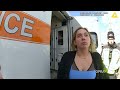
Complete Meltdown Escalates to Court Ordered Sample Collection
Eyes of an Officer | 2024-04-30
Description
South Brunswick, NJ On Wednesday, March 15, 2023, at approximately 1:41 PM, I was responding to an unrelated call. As I left, I received a call for a motor vehicle crash involving an unresponsive woman behind the wheel, located at another location. The caller reported that a vehicle was swerving e...
South Brunswick, NJ On Wednesday, March 15, 2023, at approximately 1:41 PM, I was responding to an unrelated call. As I left, I received a call for a motor vehicle crash involving an unresponsive woman behind the wheel, located at another location. The caller reported that a vehicle was swerving erratically before coming to a complete stop. The driver was observed passed out behind the wheel. I located the vehicle in question, pulled alongside the vehicle, and activated my emergency lights. I then approached the driver's side to check on the occupant. The driver, a woman, had her eyes closed, chin up, and head back against the headrest. I knocked on the window to wake her. After about ten seconds, she woke up and appeared confused. I requested that she open the door. She fumbled through her belongings and retrieved her driver's license. Her speech was slow and slurred, and she appeared lethargic. Her eyes were glazed over and droopy, with constricted pupils. I asked her if she was taking any medication. She stated that she had been to the dentist earlier and was given Zofran to prevent nausea and vomiting. She also stated that she was lost and ended up on the wrong road due to being tired from only getting two hours of sleep. An officer on the scene contacted her dentist, who confirmed that she had been seen earlier but was not prescribed any medication. Due to her condition, medical personnel were called to the scene. They evaluated her, but she refused further medical assistance. Given the circumstances, I wanted to conduct a field sobriety test. However, due to strong winds, I opted to only perform a horizontal gaze nystagmus test. The test was conducted in a partially sheltered area to minimize the wind's influence. Before the test, she was leaning on the ambulance for balance and then adjusted herself to stand with her feet wide apart. I asked her to face me, place her feet together, and put her hands at her sides. She confirmed she had no eye problems and did not wear glasses or contacts. I conducted a visual assessment of her eyes and observed that her pupils were equal in size, tracked together normally, and showed no signs of involuntary jerking. During the test, she was asked to follow a moving object (my pen). The results indicated a lack of smooth pursuit in both eyes, distinct and sustained nystagmus at maximum deviation, and nystagmus onset before 45 degrees. Based on my observations, I placed her under arrest for driving under the influence. She was searched, handcuffed, and transported to police headquarters for processing. Her vehicle was towed from the scene. At the station, I attempted to conduct further sobriety tests in a more controlled environment, but she refused. I then began a 20-minute observation period. Afterward, I read her the standard statement for operating a motor vehicle under the influence. She indicated she understood each statement and agreed to provide breath samples. However, she became emotional and started crying uncontrollably. She stated she believed she was having a panic attack. Medical personnel were called again to evaluate her. After about 30 minutes of emotional distress, she agreed to take a breathalyzer test. I, a certified breathalyzer operator, administered the test at the police headquarters. All electronic devices were removed from the room before the test. The instructions were read to her, and she acknowledged her understanding. She provided two sufficient breath samples, which yielded an average blood alcohol content (BAC) of 0.00%. Each test used a new mouthpiece. The entire breathalyzer process was witnessed by another officer. She refused a drug recognition expert evaluation and a voluntary urine sample. Given the situation, I contacted the assistant prosecutor, who advised obtaining a telephonic warrant for a blood or urine sample. A judge authorized the warrant after consultation. She was informed of the warrant and complied by providing a urine sample without incident. The sample was placed in a designated refrigerator and documented in the system. She was issued citations for multiple motor vehicle violations and informed of her court date. She was also given instructions on how to retrieve her impounded vehicle. Her husband completed the necessary paperwork before her departure. ---------------------------------------------------------------------- All videos and case documents were obtained pursuant to the New Jersey Open Public Records Act, N.J.S.A. 47:1A-1 et seq. (P.L. 2001, c. 404). Defendants are considered innocent until proven guilty. This channel is made strictly for educational and news gathering purposes. Not affiliated with any law enforcement agency.
Tags
Transcripts
AddResources
AddCharacters
AddNotes
AddQuick Actions
Event Details
EditStats History
| Date | Views | Likes |
|---|---|---|
| 2026-10-17 | 41,835 | 1,533 |
Danger Zone
These actions cannot be undone.