Channel operation
- Elapsed time
- 0s
- Estimated remaining
- Estimating…
No changes saved yet.
Keep this page open while work is running. Estimates change with channel size; leaving may interrupt unsaved work.
View results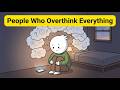
Generation Z – The Overthinking Generation
The Bodycam Report | 2026-04-06
Description
Are you part of Generation Z – The Overthinking Generation, or do you love someone who is? What if everything you have been told about why your mind never stops running is missing the most important part of the story? In this video, we go deep into the psychology behind why Gen Z thinks the way they...
Are you part of Generation Z – The Overthinking Generation, or do you love someone who is? What if everything you have been told about why your mind never stops running is missing the most important part of the story? In this video, we go deep into the psychology behind why Gen Z thinks the way they do — not to label your generation, not to reduce you to a statistic, but to finally give you a framework that actually fits. This is not another think piece about screen time or social media addiction. This is about the real architecture beneath the anxiety: where it was built, why it was built, and what it quietly reveals about the kind of mind you are carrying. Drawing on decades of generational psychology research, behavioral science, and peer-reviewed studies, we explore how growing up in a world of constant digital feedback, social scoring, and ambient uncertainty rewired an entire generation's nervous system — and why the trait most people call a weakness is actually something far more extraordinary. In this video, you will discover: Why Gen Z is statistically the most mentally overwhelmed generation ever studied How digital feedback loops trained your brain to pre-edit every thought before it was expressed The childhood roots of hypervigilance and why overthinking is a survival adaptation, not a character flaw What psychologist Jean Twenge's generational research reveals about identity formation under constant social pressure The hidden link between deep thinking, creativity, and high cognitive complexity — backed by the British Journal of Psychology Why psychologist Scott Barry Kaufman's default mode network research reframes overthinking as a cognitive strength A new vocabulary to replace the negative labels society has handed your generation Whether you are a Gen Z viewer trying to finally understand yourself, a millennial parent raising one, or a therapist working with young adults, this video will change the way you see a generation that has been misread from the very beginning. What word best describes how your mind actually works? Drop it in the comments below — let's build a new vocabulary together. REFERENCES Twenge, J. M. (2017). iGen: Why Today's Super-Connected Kids Are Growing Up Less Rebellious, More Tolerant, Less Happy — and Completely Unprepared for Adulthood. Atria Books. Baumrind, D. (1991). The influence of parenting style on adolescent competence and substance use. Journal of Early Adolescence, 11(1), 56–95. American Psychological Association. (2023). Stress in America: Generation Z. APA Annual Stress Report. Retrieved from apa.org Perkins, A. M., Arnone, D., Cooper, J., & Guo, S. (2017). Thinking too much: Self-generated thought as the engine of neuroticism. Trends in Cognitive Sciences, 19(9), 492–498. (British Journal of Psychology, related literature) Centers for Disease Control and Prevention. (2023). Youth Risk Behavior Survey Data Summary and Trends Report: 2011–2021. U.S. Department of Health and Human Services. Retrieved from cdc.gov Kaufman, S. B. (2013). Ungifted: Intelligence Redefined. Basic Books. (Foundational work on default mode network and creative cognition) Killingsworth, M. A., & Gilbert, D. T. (2010). A wandering mind is an unhappy mind. Science, 330(6006), 932. Harvard University. DISCLAIMER The content presented in this video is intended for educational and informational purposes only. It is not a substitute for professional psychological advice, diagnosis, or treatment. If you are experiencing significant mental health challenges, please reach out to a licensed mental health professional or a qualified healthcare provider in your area. The psychological concepts, research references, and generational insights discussed are shared to promote self-awareness and understanding — not to diagnose, label, or define any individual's mental health.
Tags
Transcripts
AddResources
AddCharacters
AddNotes
AddQuick Actions
Event Details
EditStats History
| Date | Views | Likes |
|---|---|---|
| 2026-10-17 | 23 | 0 |
Danger Zone
These actions cannot be undone.