Channel operation
- Elapsed time
- 0s
- Estimated remaining
- Estimating…
No changes saved yet.
Keep this page open while work is running. Estimates change with channel size; leaving may interrupt unsaved work.
View results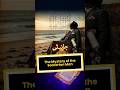
Episode 9: TAMAM SHUD. A man was found dead with a secret pocket. #truecrimecommunity #coldcase
GraveFileTV | 2026-04-22
Description
Adelaide, Australia. December 1, 1948. A well-dressed man was found slumped against the seawall on Somerton Beach. Legs crossed. Shoes polished. An unlit cigarette on his collar. People assumed he was drunk. By morning, he was dead. The autopsy found no identifiable cause of death. No injury. ...
Adelaide, Australia. December 1, 1948. A well-dressed man was found slumped against the seawall on Somerton Beach. Legs crossed. Shoes polished. An unlit cigarette on his collar. People assumed he was drunk. By morning, he was dead. The autopsy found no identifiable cause of death. No injury. No disease. No poison they could name. Every label had been removed from his clothing. He carried no wallet, no identification, no name. No one reported him missing. No one came to claim the body. Months after his death, a detective re-examining his clothing found something the original investigators had missed entirely — a secret pocket stitched into the waistband of his trousers. Inside: a tightly rolled scrap of paper bearing two words in Persian script. Tamam Shud. "It is ended." The words matched the torn final page of a rare edition of the Rubaiyat of Omar Khayyam — a 12th-century Persian poetry book found in an unlocked car near the beach. Inside the book's back cover, under ultraviolet light, investigators found the faint impressions of five lines of handwritten code. That code has never been deciphered. Not by police. Not by military cryptographers. Not by anyone in 75 years. The book also contained a phone number. It belonged to a nurse named Jessica Thomson who lived near the beach. When police showed her the dead man's photograph, she almost fainted. Then she composed herself and said she had never seen him before in her life. The lead detective believed she was lying. ─────────────────────────────── For 73 years, no one knew who he was. In 2022, Professor Derek Abbott of the University of Adelaide extracted DNA from hairs trapped in a plaster death mask made of his face in 1949. After building a genealogical tree of over 4,000 people he identified the man as Carl Webb — an electrical engineer and instrument maker from Melbourne who vanished from all public records in April 1947. But the most extraordinary part of this story is what happened during the search. For years before the DNA breakthrough, Abbott had been tracking down the nurse's suspected relatives, believing the dead man may have fathered her child. In that search he found her granddaughter — Rachel Egan. Derek Abbott and Rachel Egan fell in love. They are now married. As Egan later told the Australian Broadcasting Company: "People have said that possibly Derek married me for my DNA." ─────────────────────────────── The cipher in the back of the poetry book has never been solved. Carl Webb's cause of death remains officially unknown. The full investigation — the cipher, the nurse's secret, the Cold War spy theories, and the complete DNA story — is coming to GraveFile TV. Follow so you don't miss it.
Transcripts
AddResources
AddCharacters
AddNotes
AddQuick Actions
Event Details
EditStats History
| Date | Views | Likes |
|---|---|---|
| 2026-10-17 | 1,034 | 31 |
Danger Zone
These actions cannot be undone.