Channel operation
- Elapsed time
- 0s
- Estimated remaining
- Estimating…
No changes saved yet.
Keep this page open while work is running. Estimates change with channel size; leaving may interrupt unsaved work.
View results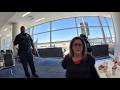
"I Would Have Put It Somewhere" — She Swapped the Display- Airport Theft Arrest | Bodycam Analysis
Uncut Bodycam | 2026-10-01
Description
A woman stopped by airport police for shoplifting a Coach handbag from a 7-Eleven inside a Texas terminal quickly discovers that her explanation — that she picked it up by accident — runs directly into surveillance footage showing she replaced the missing bag with a different one. What begins as a t...
A woman stopped by airport police for shoplifting a Coach handbag from a 7-Eleven inside a Texas terminal quickly discovers that her explanation — that she picked it up by accident — runs directly into surveillance footage showing she replaced the missing bag with a different one. What begins as a theft contact turns into a custodial arrest, and then into a Miranda compliance problem that could limit the prosecution's case before it even starts. The arrest rests on four independent bases of probable cause and is constitutionally defensible. But the officer skipped one step after placing her in custody — and under established Supreme Court precedent, that gap may cost the prosecution the most damaging statements she made. ───────────────────────────── ⚖️ Legal Breakdown ▪ Texas Penal Code § 31.03 — Theft requires unlawful appropriation with intent to deprive; accidental taking is a recognized defense but must be proven against the totality of conduct, not the defendant's stated account. ▪ Texas Penal Code § 31.02(b) — Appropriation is defined as exercising control over property, satisfied here the moment the subject walked out with the bag. ▪ Illinois v. Gates, 462 U.S. 213 (1983) — Probable cause requires only a fair probability of criminal conduct under a totality-of-circumstances standard; four independent bases were present at the time of arrest. ▪ Miranda v. Arizona, 384 U.S. 436 (1966) — Rights advisement must precede custodial interrogation; no audible Miranda warning appears in the footage before post-arrest questioning began. ▪ Rhode Island v. Innis, 446 U.S. 291 (1980) — Interrogation includes any words reasonably likely to elicit incriminating responses; travel destination questions in the context of an airport theft arrest may qualify. ▪ Graham v. Connor, 490 U.S. 386 (1989) — Force must be objectively reasonable given the severity of the crime, threat level, and resistance; handcuffing only on a non-violent misdemeanor with no physical resistance raises no excessive force issue. ▪ Exclusionary Rule — Statements obtained without Miranda warnings are subject to suppression; the Miranda gap here does not void the arrest but may limit admissible evidence at prosecution. ───────────────────────────── 📋 Case Outcome Case outcome was not publicly available at the time of this analysis. Grades: Officer — B+ | Subject — B− ───────────────────────────── 📌 Disclaimer This video is presented for educational and documentary purposes under Fair Use (17 U.S.C. § 107). The footage was obtained via public records requests (FOIA) and is intended to provide commentary on police tactics, constitutional law, and civil rights. We do not encourage harassment of any individuals featured. ───────────────────────────── #bodycam #police #legalanalysis #airportarrest #mirandarights #shoplifting #texaslaw #probablecause #coachhandbag #theftarrest
Tags
Transcripts
AddResources
AddCharacters
AddNotes
AddQuick Actions
Event Details
EditStats History
| Date | Views | Likes |
|---|---|---|
| 2026-10-17 | 81 | 175 |
Danger Zone
These actions cannot be undone.