Channel operation
- Elapsed time
- 0s
- Estimated remaining
- Estimating…
No changes saved yet.
Keep this page open while work is running. Estimates change with channel size; leaving may interrupt unsaved work.
View results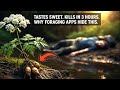
Looks Like Carrot, Smells Like Parsnip: It Killed More Foragers Than Any Plant
Bodycam CrossExposed | 2025-12-30
Description
Three bites. Three hours. That's how long it took water hemlock to kill a 23-year-old experienced forager in Maine, 1992. His brother, who took only one bite, survived after days of seizures. The plant they mistook for ginseng grows by every hiking trail, creek bed, and roadside ditch across North A...
Three bites. Three hours. That's how long it took water hemlock to kill a 23-year-old experienced forager in Maine, 1992. His brother, who took only one bite, survived after days of seizures. The plant they mistook for ginseng grows by every hiking trail, creek bed, and roadside ditch across North America—disguised as wild carrot, parsnip, and dozens of edible plants your grandmother harvested safely for decades. 🔬 THE SCIENCE: The USDA calls Cicuta maculata "the most violently toxic plant growing in North America." Between 1919-1975, it killed more foragers than any other species. Current data: 1-2 human deaths per year in the US alone, with a 30% mortality rate even with hospital treatment. The poison is cicutoxin—a C17 polyacetylene compound that blocks GABA receptors in your brain. Within 15-60 minutes: violent vomiting, dilated pupils, excessive salivation. By hour 2: tonic-clonic convulsions so powerful they dislocate shoulders, crack ribs, and break vertebrae. Death occurs from respiratory paralysis when your diaphragm seizes completely. You remain conscious during the convulsions—feeling everything until coma arrives. Research published in Clinical Toxicology confirms: cooking does NOT destroy cicutoxin. Heat-stable polyacetylene structure remains toxic at any temperature. One study on laboratory mice showed identical symptoms regardless of preparation method. ⚠️ THE SUPPRESSION: Why don't foraging apps warn you properly? Because accurate plant identification requires botanical training that cuts into profit margins. Instagram influencers post misidentified Apiaceae with thousands of likes. TikTok "foraging experts" teach pattern recognition instead of rigorous methodology—leading followers directly to deadly mimics. Between 1986-1996, poison control centers recorded 19 plant-related deaths. Water hemlock killed more people than any other species. Yet field guides simplify identification to "white umbrella flowers" and "carrot-like leaves"—descriptions that match 47 different plants in the same family. The foraging industry profits from making wild harvesting look easy. Workshops led by unqualified instructors, apps that gamify plant ID, social media content that values aesthetics over accuracy. Every simplified guide, every "beginner-friendly" identification chart, every viral foraging video without proper warnings—they're all complicit in the next death. Who benefits from this suppression? Not Big Pharma hiding cures. The enemy is ignorance packaged as expertise, profit prioritized over safety, and algorithms promoting engagement over education. 🌱 THE ONLY SAFE APPROACH: Water hemlock grows where soil stays wet: stream banks, pond edges, marshes, irrigation ditches. If you see white umbrella flowers in wet areas, assume deadly until proven otherwise. The ONLY reliable identification method: Check leaf veins with magnification. On safe plants (carrot, parsnip, celery), veins run from center to tips of teeth. On water hemlock, veins run from center to NOTCHES between teeth—ending in gaps, not points. This feature is unique to Cicuta. Other checks: Purple streaks on smooth hairless stems. Chambered roots that ooze yellow liquid when cut. Parsnip smell from crushed leaves. But NEVER rely on one feature alone. If you cannot confirm ALL identifying features with 100% certainty using multiple methods—leave it alone. If you suspect exposure after touching or tasting: call Poison Control immediately at 1-800-222-1222. Do NOT induce vomiting. Do NOT wait for symptoms. Transport to hospital with plant sample in sealed bag. ⚠️ CRITICAL WARNING: This video is NOT a foraging guide. This is a warning about how convincing the disguise is. The 23-year-old who died had foraged since childhood. The 14-year-old Indigenous boy who died in 2001 was taught by his family's traditional knowledge. Experience does not protect you—only systematic verification does.. #WaterHemlock #ForagingDanger #DeadlyPlants #PlantIdentification #WildForaging #PoisonousPlants #ForagingSafety #WildCarrot #Homesteading #SurvivalSkills
Tags
Transcripts
AddResources
AddCharacters
AddNotes
AddQuick Actions
Generate Transcript Not implemented
View Analytics Not implemented
Event Details
EditStats History
Latest 30 snapshots in save order, oldest saved to newest saved.
Older entries with no recorded time zone are shown as recorded and marked unknown.
| Date & time | Views | Likes | Comments |
|---|---|---|---|
| 2026-10-17 04:13:25 (zone unknown) | 142 | 6 | 0 |
| 2026-10-22 13:18:56 EDT | 146 | 6 | 1 |
Danger Zone
These actions cannot be undone.