Channel operation
- Elapsed time
- 0s
- Estimated remaining
- Estimating…
No changes saved yet.
Keep this page open while work is running. Estimates change with channel size; leaving may interrupt unsaved work.
View results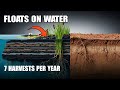
700 Years Without Fertilizer: Why Don't Agricultural Schools Teach This? | Forgotten Soil
Bodycam CrossExposed | 2025-12-20
Description
There is soil that floats on water and feeds itself without fertilizer for 700 years across shallow lakes. It doesn't drain. It doesn't compact. It doesn't need rotation or rest or chemical amendment to stay fertile. It builds itself from lake mud and decomposing reeds and produces food continuously...
There is soil that floats on water and feeds itself without fertilizer for 700 years across shallow lakes. It doesn't drain. It doesn't compact. It doesn't need rotation or rest or chemical amendment to stay fertile. It builds itself from lake mud and decomposing reeds and produces food continuously without ever touching solid ground. This system fed an empire. It sustained Tenochtitlan—a capital city of 200,000 people, larger than any European city of its time. For seven centuries. Then the Spanish drained it. Paved it over. Called it primitive. Today it's buried under Mexico City. 🔬 THE SCIENCE: Chinampa soil composition: 60% lake mud dredged from canal bottoms, 30% decomposed aquatic vegetation (water lilies, reeds, cattails), 10% organic sediment. The layers alternate deliberately—fresh plants laid so decomposition happens in controlled aerobic conditions despite constant water saturation. The impossible part: waterlogged soil should be oxygen-depleted. Oxygen depletion should kill aerobic bacteria and prevent nutrient cycling. But chinampa soil maintains aerobic bacterial populations equivalent to well-drained upland soil through a passive ventilation system built from decomposing plants. Water hyacinth and reed layers create air pockets. Decomposition releases heat. Heat drives convection. Convection pulls oxygen down through channels. No pumps. No drainage. No mechanical intervention required. Production metrics that defy modern agriculture: 7 harvests per year for 700 years. Maize, beans, squash, tomatoes, peppers, flowers, amaranth rotating continuously without depleting soil structure. Modern intensive agriculture produces 2 harvests per year maximum before soil collapses and requires fallow or synthetic inputs. Organic matter content: 40-60% in chinampas versus 3-5% in modern agricultural soil before it's considered exhausted. The oldest chinampa deposits at Xochimilco are 900 years old. Still producing. Never fertilized with anything synthetic. Never plowed. Never tilled. Never drained. Never amended with anything except more lake mud and plant matter. Soil pH stays between 6.5-7.2—never acidifies, never becomes saline despite constant water contact over centuries. In 1973, Mexican archaeologist Teresa Rojas Rabiela excavated beneath Mexico City expecting degraded lakebed. What her team found stopped the dig for three months: chinampa soil still structured, still fertile, still holding exact composition it had 500 years before Spanish contact. Layers remained distinct—boundaries hadn't dissolved or merged despite five centuries of submersion. This contradicts modern soil science which teaches waterlogged organics collapse into undifferentiated anaerobic sludge within decades. 📚 SOURCES: Rojas Rabiela, T. (1983). La agricultura chinampera: compilación histórica. Universidad Autónoma Chapingo. Parsons, J.R., et al. (1991). The Last Pescadores of Chimalhuacán, Mexico. University of Michigan Museum of Anthropology. Crossley, P.L. (2004). Sub-irrigation in wetland agriculture. Agriculture and Human Values, 21(2-3), 191-205. Torres-Lima, P., et al. (1994). Urban sustainable agriculture: The paradox of the chinampa system in Mexico City. Agriculture and Human Values, 11(1), 37-46. Canabal Cristiani, B. (1997). Xochimilco: una identidad recreada. Universidad Autónoma Metropolitana. The soil remembers what we were taught to forget. That water can build instead of destroy. That saturation can feed instead of drown. And that memory matters now—as climate change brings flooding, as aquifers empty, as industrial agriculture depletes soil faster than geology replaces it. There is soil that floats on water and feeds itself without fertilizer for 700 years. And it is still working today. Have you ever seen or visited chinampas? What other water-based farming systems should we cover? Comment below. #Chinampa #RegenerativeAgriculture #AztecAgriculture #ForgottenKnowledge #FloatingGardens #Permaculture #WaterFarming #IndigenousWisdom #SustainableAgriculture #AncientTechnology
Tags
Transcripts
AddResources
AddCharacters
AddNotes
AddQuick Actions
Generate Transcript Not implemented
View Analytics Not implemented
Event Details
EditStats History
Latest 30 snapshots in save order, oldest saved to newest saved.
Older entries with no recorded time zone are shown as recorded and marked unknown.
| Date & time | Views | Likes | Comments |
|---|---|---|---|
| 2026-10-17 04:13:25 (zone unknown) | 671 | 21 | 0 |
| 2026-10-22 13:21:54 EDT | 672 | 21 | 0 |
Danger Zone
These actions cannot be undone.