Channel operation
- Elapsed time
- 0s
- Estimated remaining
- Estimating…
No changes saved yet.
Keep this page open while work is running. Estimates change with channel size; leaving may interrupt unsaved work.
View results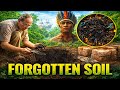
Improves Forever, Can’t Be Patented: The Soil Modern Agriculture Hates
Bodycam CrossExposed | 2026-01-06
Description
For over 5,000 years, Indigenous civilizations built soil that became more fertile with every harvest. It required no fertilizer, no chemicals, and regenerated itself naturally. Then nearly everyone who knew how to make it disappeared. This soil is called terra preta — and its story challenges ever...
For over 5,000 years, Indigenous civilizations built soil that became more fertile with every harvest. It required no fertilizer, no chemicals, and regenerated itself naturally. Then nearly everyone who knew how to make it disappeared. This soil is called terra preta — and its story challenges everything modern agriculture claims to understand. Terra preta contains up to 70 times more stable carbon than surrounding Amazonian soils, with nitrogen and phosphorus levels three times higher than infertile oxisols. Radiocarbon dating shows continuous soil construction from 500 BCE to 950 CE, proving deliberate, long-term human engineering rather than natural formation. Unlike modern compost, terra preta remains structurally intact for thousands of years due to biochar created through low-temperature pyrolysis. Research by Johannes Lehmann (Cornell University) revealed that biochar in terra preta facilitates electron transfer between soil microbes, accelerating nutrient cycling and microbial cooperation. Rice yields on terra preta reach up to 3.8 tons per hectare — more than double adjacent infertile soils — without fertilizer or pesticides. Terra preta could not be patented. It required no repeat purchases, no external inputs, and no centralized control. Its benefits compound over decades — not quarters. When European diseases wiped out nearly 90% of Indigenous populations in the Americas, the knowledge system collapsed. Industrial agriculture rose in its place, dependent on synthetic fertilizer, soil degradation, and endless consumption. A system that improves itself had no place in a profit-driven model. Indigenous farmers slowly combined charcoal, food waste, pottery shards, bones, and organic matter into soil over generations. The result was black earth that retained nutrients, supported microbial life, and regenerated itself at approximately one centimeter per year. Lehmann, J. et al. (2003). Nutrient availability and leaching in terra preta soils. Soil Science Society of America Journal. Glaser, B. (2001). The Terra Preta phenomenon. Naturwissenschaften. Neves, E.G. et al. (2020). Indigenous soil management in Amazonia. Science Advances. Lehmann, J. & Joseph, S. (2015). Biochar for Environmental Management. Routledge. If this knowledge was buried once, it doesn’t have to be buried again. Subscribe to uncover what history tried to erase. What other systems do you think we were never meant to remember? #TerraPreta #ForgottenSoil #AncientAgriculture #Biochar #IndigenousKnowledge #RegenerativeFarming #SuppressedScience
Tags
Transcripts
AddResources
AddCharacters
AddNotes
AddQuick Actions
Event Details
EditStats History
| Date | Views | Likes |
|---|---|---|
| 2026-10-17 | 1,837 | 356 |
Danger Zone
These actions cannot be undone.