Channel operation
- Elapsed time
- 0s
- Estimated remaining
- Estimating…
No changes saved yet.
Keep this page open while work is running. Estimates change with channel size; leaving may interrupt unsaved work.
View results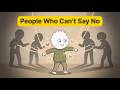
"The 'Doormat Effect': Why Kind People Are Trained to Attract Toxic Relationships"
The Bodycam Report | 2026-03-31
Description
Have you ever wondered why the kindest people you know seem to end up in the most draining relationships? "The 'Doormat Effect': Why Kind People Are Trained to Attract Toxic Relationships" isn't just a theory — it's a deeply researched psychological pattern that may have been quietly shaping your li...
Have you ever wondered why the kindest people you know seem to end up in the most draining relationships? "The 'Doormat Effect': Why Kind People Are Trained to Attract Toxic Relationships" isn't just a theory — it's a deeply researched psychological pattern that may have been quietly shaping your life since childhood. In this video, we go beyond surface-level self-help to explore the real science behind why emotionally intelligent, warm-hearted people often find themselves giving endlessly to people who take without hesitation. This isn't about blame. This is about understanding the invisible programming that runs beneath your relationships — and finally having the language to change it. Drawing from groundbreaking research in attachment theory, Polyvagal Theory, and developmental psychology, we trace the exact moment this pattern begins — not in adulthood, but in your earliest years, when your nervous system was still learning what "safe" meant. You'll discover how childhood environments quietly condition sensitive people to equate self-sacrifice with love, and why that conditioning follows you into every friendship, partnership, and workplace dynamic you've ever navigated. In this video, you'll discover: Why kind people are neurologically wired to absorb others' emotional chaos How childhood attachment styles create the foundation of people-pleasing behavior The role of Dr. Stephen Porges' Polyvagal Theory in explaining your body's response to conflict Why your nervous system confuses emotional unavailability with a problem you need to fix The hidden health costs of chronic boundary suppression, backed by CDC and peer-reviewed data How high empathy becomes a superpower the moment self-permission enters the picture A new psychological framework for understanding yourself — beyond the labels society gave you This video is for the person who has spent years being the dependable one, the understanding one, the one who always makes room for everyone else — and is only now beginning to ask what it has cost them. If any part of this resonated with something you've lived through, drop it in the comments. Your story might be exactly what someone else needs to hear today. REFERENCES Porges, S. W. (2011). The Polyvagal Theory: Neurophysiological Foundations of Emotions, Attachment, Communication, and Self-Regulation. W. W. Norton & Company. Bowlby, J. (1988). A Secure Base: Parent-Child Attachment and Healthy Human Development. Basic Books. Brown, B. (2010). The Gifts of Imperfection: Let Go of Who You Think You're Supposed to Be and Embrace Who You Are. Hazelden Publishing. Graziano, W. G., & Tobin, R. M. (2009). Agreeableness: The forgotten personality dimension in peer relations. Journal of Personality, 77(3), 841–886. Felitti, V. J., et al. (1998). Relationship of childhood abuse and household dysfunction to many of the leading causes of death in adults. American Journal of Preventive Medicine, 14(4), 245–258. Centers for Disease Control and Prevention. (2020). Adverse Childhood Experiences (ACEs): Preventing Early Trauma to Improve Adult Health. CDC Vital Signs Report. Mikulincer, M., & Shaver, P. R. (2007). Attachment in Adulthood: Structure, Dynamics, and Change. Guilford Press. DISCLAIMER The content in this video is created strictly for educational and informational purposes. It is not intended to serve as professional psychological advice, diagnosis, or treatment. If you are experiencing emotional distress, relationship difficulties, or mental health concerns, please consult a licensed mental health professional. The psychological concepts and research referenced in this video are presented to encourage self-awareness and general understanding, not to replace therapeutic guidance.
Tags
Transcripts
AddResources
AddCharacters
AddNotes
AddQuick Actions
Event Details
EditStats History
| Date | Views | Likes |
|---|---|---|
| 2026-10-17 | 36 | 0 |
Danger Zone
These actions cannot be undone.