Channel operation
- Elapsed time
- 0s
- Estimated remaining
- Estimating…
No changes saved yet.
Keep this page open while work is running. Estimates change with channel size; leaving may interrupt unsaved work.
View results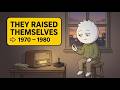
The Psychology of Late Gen X (1970–1980)
The Bodycam Report | 2026-03-20
Description
If you were born between 1970 and 1980, The Psychology of Late Gen X may be the most accurate thing you've ever watched about yourself — and nobody warned you it was coming. This video isn't a generational debate. It's a deep psychological excavation of why you think the way you think, carry what yo...
If you were born between 1970 and 1980, The Psychology of Late Gen X may be the most accurate thing you've ever watched about yourself — and nobody warned you it was coming. This video isn't a generational debate. It's a deep psychological excavation of why you think the way you think, carry what you carry, and quietly outperform almost everyone around you without ever asking for credit. Late Gen X is the most psychologically overlooked cohort in modern behavioral research. You came of age in a era defined by rising divorce rates, latchkey independence, the collapse of institutional trust, and a cultural shift that handed children self-reliance before it handed them stability. What grew out of that environment wasn't damage. It was a remarkably sophisticated internal architecture — and this video is here to name it properly. In this video, you'll discover: Why Late Gen X developed unusually high autonomous coping strategies compared to earlier and later generations The real science behind Emmy Werner's landmark resilience research and why it maps directly onto your childhood experience How Diana Baumrind's parenting style research explains the emotional self-sufficiency you built without realizing it Why you often carry more than people see — and the hidden psychological cost of being the person everyone leans on The neurological evidence that your adaptive intelligence is a measurable strength, not just a survival habit What psychologist Scott Barry Kaufman's research on psychological richness reveals about people who grew up building themselves Why the labels society gave your generation — guarded, detached, self-contained — are the wrong words entirely The exact moment in your childhood when your internal blueprint was drawn, and what it means for your relationships today This isn't self-help. This is behavioral science meeting lived experience — the kind that makes you feel seen without being simplified. If any part of this video stopped you mid-scroll, or made you pause and think that's exactly it — drop it in the comments. Tell me: what did you teach yourself that no one ever taught you? REFERENCES Werner, E. E., & Smith, R. S. (2001). Journeys from Childhood to Midlife: Risk, Resilience, and Recovery. Cornell University Press. Baumrind, D. (1991). The influence of parenting style on adolescent competence and substance use. Journal of Early Adolescence, 11(1), 56–95. https://doi.org/10.1177/0272431691111004 Kaufman, S. B. (2020). Transcend: The New Science of Self-Actualization. TarcherPerigee. Twenge, J. M. (2017). iGen: Why Today's Super-Connected Kids Are Growing Up Less Rebellious, More Tolerant, Less Happy. Atria Books. (Chapter 1 contextualizes generational psychological shifts from Gen X onward.) Lachman, M. E. (2004). Development in midlife. Annual Review of Psychology, 55, 305–331. https://doi.org/10.1146/annurev.psych.55.090902.141521 Antonovsky, A. (1987). Unraveling the Mystery of Health: How People Manage Stress and Stay Well. Jossey-Bass. (Foundation for the "sense of coherence" framework referenced in Emmy Werner's research.) Collins, W. A., Maccoby, E. E., Steinberg, L., Hetherington, E. M., & Bornstein, M. H. (2000). Contemporary research on parenting: The case for nature and nurture. American Psychologist, 55(2), 218–232. DISCLAIMER This video is created for educational and informational purposes only. The content presented is based on publicly available psychological research, academic studies, and generational behavioral patterns. It is not intended to serve as professional psychological advice, diagnosis, or treatment. If you are experiencing mental health challenges, please consult a licensed mental health professional. Individual experiences vary, and the generalizations discussed reflect broader research trends, not absolute truths about any specific person.
Tags
Transcripts
AddResources
AddCharacters
AddNotes
AddQuick Actions
Generate Transcript Not implemented
View Analytics Not implemented
Event Details
EditStats History
Latest 30 saved snapshots, oldest to newest.
| Date & time | Views | Likes | Comments |
|---|---|---|---|
| 2026-10-17 04:07:16 | 214 | 5 | 2 |
Danger Zone
These actions cannot be undone.