Channel operation
- Elapsed time
- 0s
- Estimated remaining
- Estimating…
No changes saved yet.
Keep this page open while work is running. Estimates change with channel size; leaving may interrupt unsaved work.
View results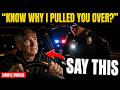
When a Cop Asks "Do You Know Why I Pulled You Over?" — Say THIS
The Amendment Desk | 2026-07-11
Description
When a police officer walks up to your window and asks "Do you know why I pulled you over?" — what you say in the next three seconds can decide whether you drive home with a warning or end up in a criminal investigation. In this video, former prosecutor turned criminal defense attorney Ethan Hollowa...
When a police officer walks up to your window and asks "Do you know why I pulled you over?" — what you say in the next three seconds can decide whether you drive home with a warning or end up in a criminal investigation. In this video, former prosecutor turned criminal defense attorney Ethan Holloway breaks down the four traps hidden inside that one question, the three mistakes that hand police a case against you, and the exact words to say instead. If you're a driver, a homeowner, a gun owner, or anyone who wants to protect their constitutional rights during a traffic stop, this is the one to watch. These are the same techniques taught at the police academy — and once you know them, they stop working on you. 🚔 In this video you'll learn: ✅ The exact words to say when a cop asks "Do you know why I pulled you over?" ✅ The 4 psychological traps hidden inside that question ✅ Why "just being honest" becomes Exhibit A in the police report ✅ How a simple traffic ticket turns into a criminal charge ✅ Your Fifth Amendment rights at a traffic stop (Berkemer v. McCarty) ✅ Why you must SAY the words to stay silent (Salinas v. Texas) ✅ What to do when the officer orders you out of the car (Pennsylvania v. Mimms) ✅ How to refuse a search without ever raising your voice Remember: the fight is never on the roadside — it's in court. Be polite, but be silent. ⏱️ CHAPTERS 0:00 — The traffic stop that changes everything 1:40 — The exact words to say (memorize these) 2:12 — Why this question is a trap, not a question 3:03 — Trap #4: The confession trap 3:53 — Trap #3: How a ticket becomes a criminal case 4:57 — Trap #2: The charge upgrade 5:30 — Trap #1: The one that catches careful people 6:41 — The 3 mistakes good people make 7:25 — The case law: Berkemer & Salinas 8:16 — The one sentence that ends the stop 9:12 — Recap: your roadside game plan 10:04 — How the stop ends (and what's next) 👉 If this helped you, SUBSCRIBE so you're ready before it happens to you. And drop a comment — has this ever happened to you or someone in your family? I read every one. 🔔 NEXT VIDEO: What to say when a cop says "Blow into this breathalyzer or go to jail." ⚖️ DISCLAIMER: This video is legal education and commentary, not legal advice. Laws vary by state and situation. Always consult a licensed attorney in your jurisdiction about your specific circumstances. Watching this video does not create an attorney-client relationship. Sources & Legal References Fifth Amendment, U.S. Constitution — the right against self-incrimination ("nor shall be compelled in any criminal case to be a witness against himself"). https://constitution.congress.gov/constitution/amendment-5/ Berkemer v. McCarty, 468 U.S. 420 (1984) — Miranda protections apply even to minor misdemeanor traffic offenses once a person is in custody; but routine roadside questioning during an ordinary traffic stop is not "custodial," so officers can question you before any Miranda warning is required. https://supreme.justia.com/cases/federal/us/468/420/ Salinas v. Texas, 570 U.S. 178 (2013) — the right to remain silent is not self-executing; you must expressly invoke it, or your silence can be used against you. https://supreme.justia.com/cases/federal/us/570/178/ Pennsylvania v. Mimms, 434 U.S. 106 (1977) — during a lawful traffic stop, an officer may order the driver to step out of the vehicle. https://supreme.justia.com/cases/federal/us/434/106/ One correction to make before recording. In the script you have Ethan say Berkemer "confirmed that protection covers you at an ordinary traffic stop." That slightly overstates it. Berkemer actually held the opposite about Miranda — a routine traffic stop is not custody, so the officer does not have to read you your rights before the fishing questions. That's actually a stronger point for your channel. I'd tweak the line to: "The Supreme Court made this clear in Berkemer versus McCarty, back in 1984. A routine traffic stop is not considered custody, which means the officer does not have to read you your rights before he starts asking questions. That is exactly why he does his fishing on the roadside, before the handcuffs ever come out. Your Fifth Amendment right is still yours the whole time — but you have to use it, out loud." That keeps the citation accurate and reinforces the "don't wait for Miranda" theme. Every case above links to Justia, which shows the full opinion and official U.S. Reports citation — solid, free, and citable on screen. Want me to add a short on-screen citation line (case name + year) timed to each moment the case is mentioned? Sources: Berkemer v. McCarty (Justia), Salinas v. Texas (Justia), Pennsylvania v. Mimms (Justia) #KnowYourRights #TrafficStop #CriminalDefense #PoliceEncounter #ConstitutionalRights #PleadTheFifth #FifthAmendment #DontTalkToThePolice #LegalTips #PulledOver #PoliceStop #CivilRights
Tags
Transcripts
AddResources
AddCharacters
AddNotes
AddQuick Actions
Event Details
EditStats History
| Date | Views | Likes |
|---|---|---|
| 2026-10-17 | 5,927 | 151 |
Danger Zone
These actions cannot be undone.